on
game guide
- Get link
- X
- Other Apps
Survival games have evolved into one of the most popular genres in modern gaming.
These games center on resource management, exploration, and the strategies required to survive in extreme conditions.
They offer thrilling systems where players engage in cooperation, competition, and conquest amidst threatening creatures and multiplayer environments.
The survival genre dates back to the late 1980s and early 1990s, when video games began incorporating systems related to resource management and environmental hazards.
One of the earliest examples is "The Oregon Trail," released in 1971, where players had to manage food, supplies, and health while making difficult choices on a perilous journey across the American frontier.
Released in 1992, "UnReal World" focused on wilderness survival, reflecting realism by requiring players to manage hunger, shelter, and crafting while surviving encounters with wildlife and other human characters.
These early titles laid the groundwork for more complex survival games by emphasizing the struggle against the environment as a core challenge.
As gaming transitioned to 3D graphics, the survival genre also underwent significant advancements.
In 2009, "Minecraft" was released, profoundly impacting the genre by combining survival mechanics with a sandbox world.
Players could explore procedurally generated environments while gathering resources, building structures, and fending off monsters; its success paved the way for greater player autonomy in survival games.
Released around the same time, "Don't Starve" offered a new perspective on survival with its dark, whimsical systems focused on crafting and exploration in a hostile environment.
Its emphasis on visual style, combined with complex survival systems like hunger and sanity management, made it a standout title in the genre.
The zombie apocalypse survival game "DayZ" popularized the concept of open-world, player-driven survival.
Players had to scavenge for supplies while avoiding threats from both zombies and other players.
This blend of Player-vs-Environment (PvE) and Player-vs-Player (PvP) interaction became a defining characteristic of modern survival games.

Titles like "Rust" and "ARK: Survival Evolved," released in 2013 and 2015 respectively, went beyond simple player interaction, creating environments where players could tame and conquer dinosaurs in a prehistoric setting.
Notably, "ARK" gained immense popularity by allowing players to clash with dinosaurs while also taming them for transportation and combat.
These multiplayer titles introduced higher levels of social interaction and unpredictability, as players had to navigate not only environmental hazards but also the unpredictable nature of human opponents.
Since survival games revolve around exploring the unknown and overcoming extreme environments, their fusion with the horror genre was a natural progression.
Games like "Resident Evil" and "Silent Hill" feature survival elements such as limited resources and inventory management, but they focus primarily on psychological horror.
Furthermore, these games often lack freedom, following fixed routes and quests that conclude with a set ending.
In contrast, survival-horror hybrids gained popularity because they offer a storyline while maintaining a high degree of freedom in how players choose to progress.

Released in 2014, "The Forest" follows a survivor of a plane crash on a mysterious island who must rescue his kidnapped son while surviving attacks from cannibals and mutant experiments.
Beyond building and resource gathering, it added horror elements through the exploration of dark caves where enemies can suddenly jump out in limited visibility.
2018's "Subnautica" involves escaping an alien planet after a spaceship crash, with the player needing to cure themselves of a virus to secure their departure.
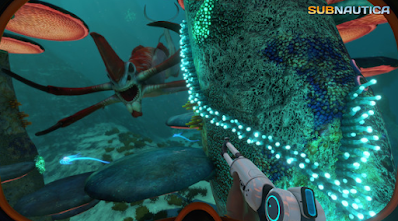
The horror in "Subnautica" stems from thalassophobia (fear of the deep sea), as the main stage is not land, but an underwater world where players must build and survive.
As players descend deeper, visibility becomes even more restricted than in caves, and sudden attacks from leviathan-class creatures can lead to a quick demise.
From the text-based systems of the 1980s to today’s vast open-world multiplayer experiences, the survival genre has seen immense growth and evolution.
Whether in realistic scenarios or unknown worlds, survival games—which require players to survive through an avatar—demand a much higher investment of playtime than other genres.